Propose A Case
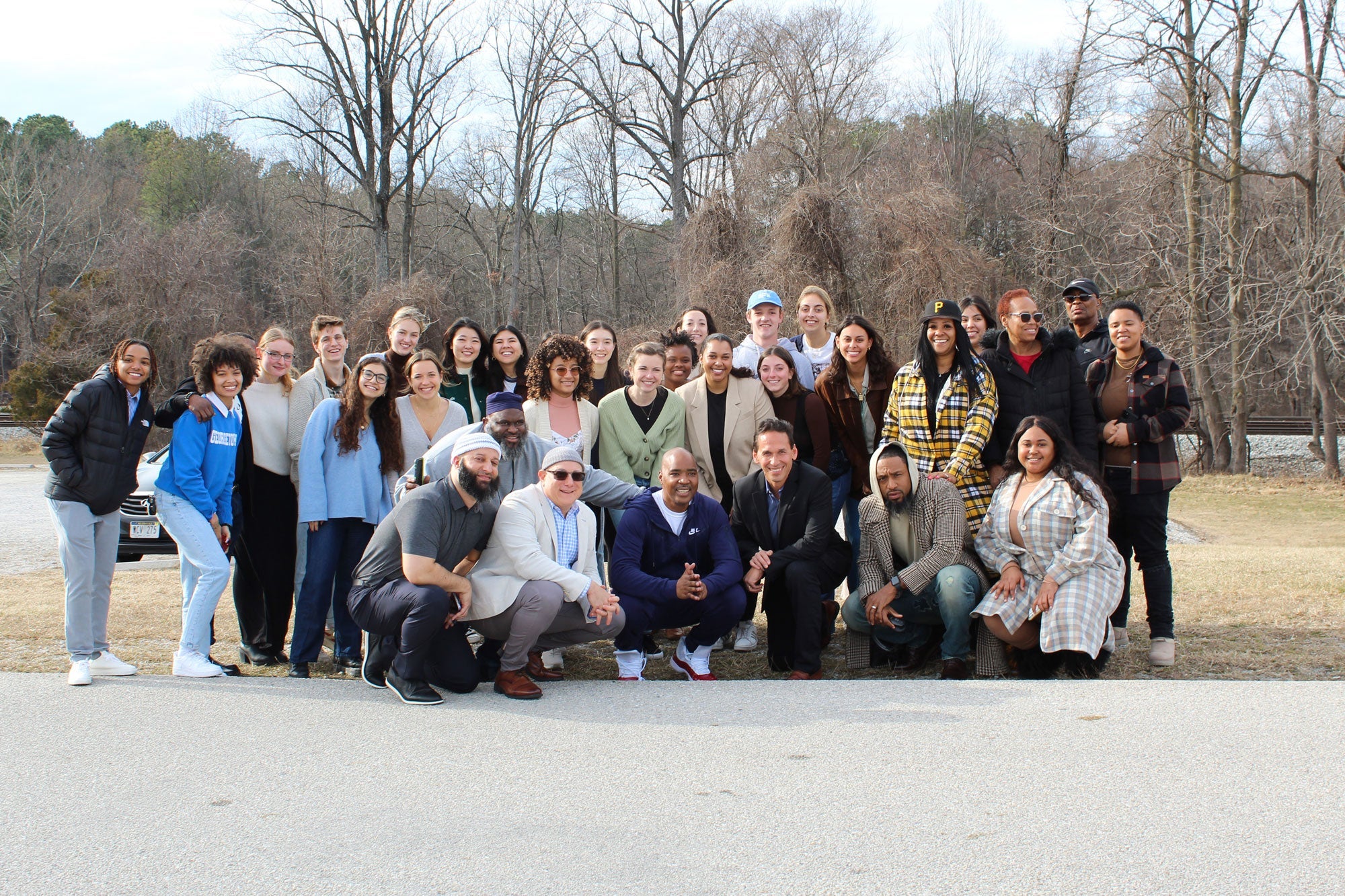
Each spring, Making an Exoneree takes on a small number of wrongful conviction cases around the country.
Submit Your Case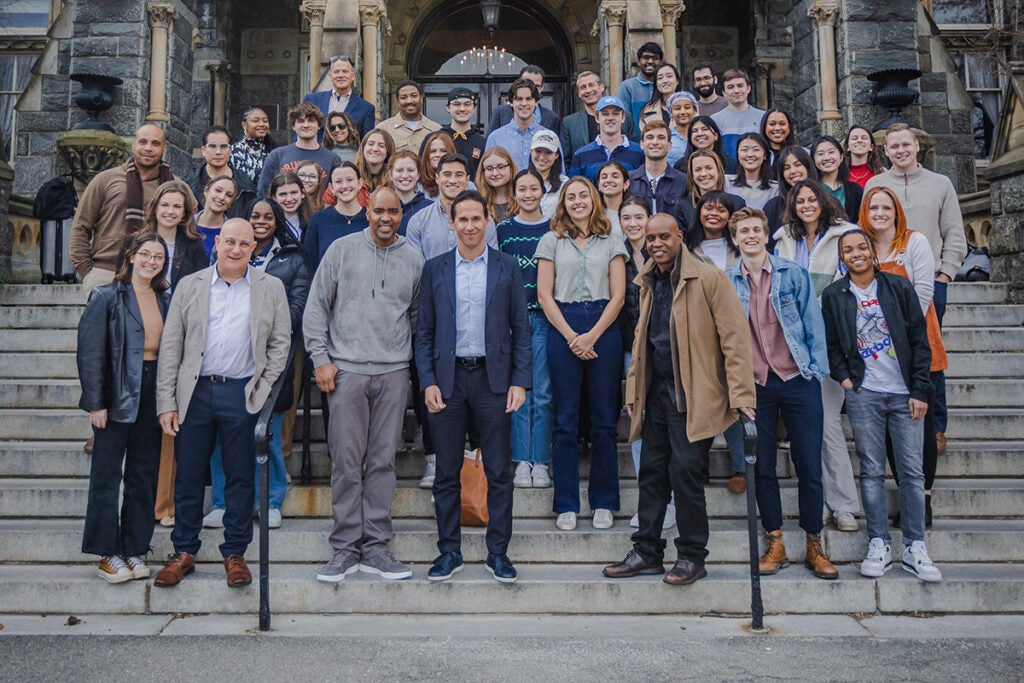
Making an Exoneree is an extraordinary and unprecedented course and program at Georgetown University. This 5-credit course — formally labeled GOVX 4000, Prison Reform Project, but informally known as “Making an Exoneree” — is highly selective, with approximately 100 applicants for 15 spaces, which are reserved for passionate and highly-motivated students. The class does not have readings, papers, or exams. Instead, the students spend an intensive semester as investigative journalists, documentarians, and social justice activists, reinvestigating likely wrongful conviction cases and ultimately creating a public documentary that highlights the aspects of wrongful conviction and tells the story of the incarcerated individual. Students are empowered to travel to the crime scenes, visit the person in prison, and create short documentaries, websites, and social media campaigns advocating for exoneration (and for parole, clemency, resentencing, or other release, if appropriate).
Unlike traditional innocence projects, which primarily provide legal services and often focus on cases involving DNA evidence, Making an Exoneree concentrates on complex wrongful conviction cases that require reinvestigation, storytelling, and public advocacy, as these cases are often decades old without DNA evidence or available appeals. The students’ ultimate goal is to breathe new life into these cases and help bring innocent people home from prison, utilizing every available resource and tailoring their approach to the specific case.
The undergraduate program also works closely with a Georgetown Law companion course, taught by Marty Tankleff and Joy Evans, in which law students provide critical paralegal support to undergraduate teams, while simultaneously assisting counsel and pursuing legal avenues for the incarcerated individual.
While the program originated at Georgetown University in 2018 and has been taught there each spring semester since, it has also expanded to four partner undergraduate universities, creating a nationwide movement for student advocacy on wrongful convictions. Today, across five universities and Georgetown Law, Making an Exoneree has investigated 61 cases and contributed to the release of 13 innocent individuals nationwide, who collectively served more than 300 years in prison for crimes they did not commit. Many others are now represented by counsel and/or receiving significant media attention.
Read more about the broader program at www.makinganexoneree.org.
10 individuals who shared their stories with the Georgetown Making an Exoneree program have been exonerated or released: Valentino Dixon, Eric Riddick, Keith Washington, Arlando “Tray” Jones III, Kenneth Bond, Terrel Barros, Edward Martinez, Gary Benloss, Rodney Derrickson, and John Kinsel.
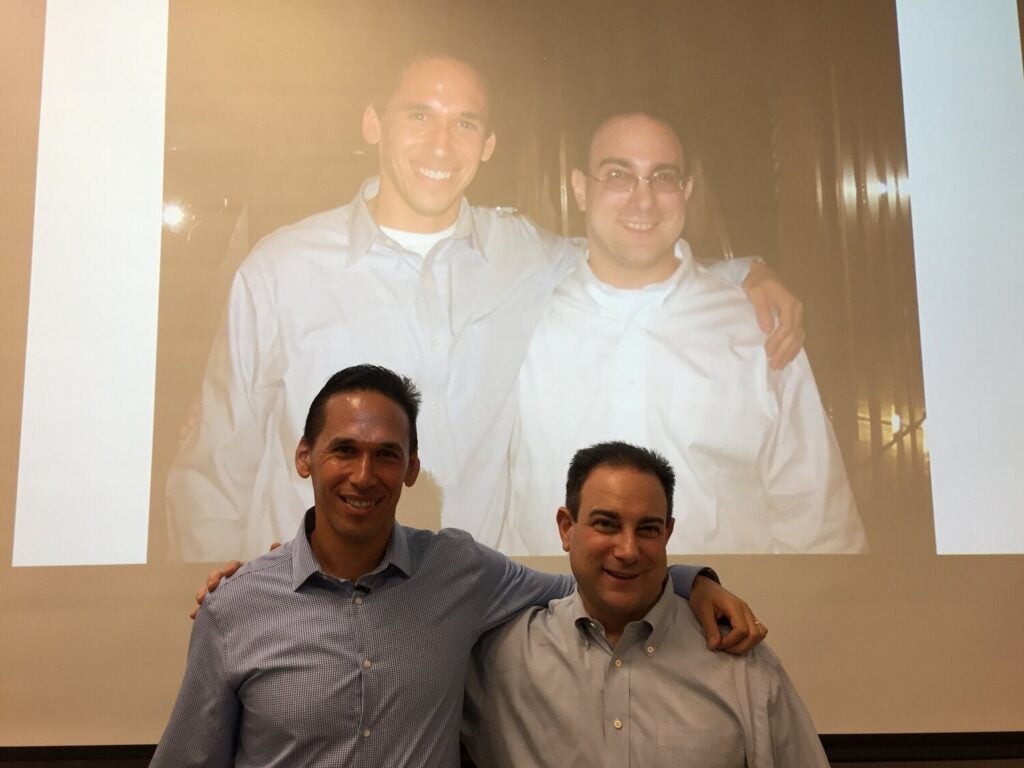
Making an Exoneree is taught by Marc Howard and Marty Tankleff in the College of Arts & Sciences. Howard and Tankleff, childhood friends since the age of three, launched Making an Exoneree based on their own experience working to prove Tankleff’s innocence after he was wrongfully convicted in the murder of his parents when he was 17. Tankleff spent over 17 years in prison before he was ultimately exonerated.
Tankleff went on to become a criminal defense attorney in New York and is Georgetown’s Peter P. Mullen Distinguished Visiting Professor. Howard is the director of the Prisons and Justice Initiative and also a Georgetown professor of government and law. Together, they saw the capacity of passionate undergraduate students to make a difference in the lives of other wrongfully convicted people, and each has become a leading voice for criminal legal reform.
Demonta Chappell
Kevin Herrick
Doug Gilding
Lucy Faith Duncan
Ken Gillum
Ha’son Cleveland
John Kinsel
Sarah Pender
Billy Pennington
Jamie Snow
Rodney Derrickson
Arlando “Tray” Jones III
Melvin Ortiz
Charles Santana
Raymond Allan Warren
Anthony Apanovitch
Terrel Barros
Edward Martinez
Jermane Scott
Keith Washington
Christina Boyer
John Brookins
James Fowler
Tjane Marshall
Eric Riddick
Nanon Williams
Nanon Williams has spent nearly 34 years in prison for a crime he did not commit. When he was just a teenager, Nanon was wrongfully convicted and sent to death row after a trial that featured shoddy forensics, blatantly incorrect ballistics evidence, and false testimony by the actual perpetrator. 27 years later, with his sentence commuted to life, Nanon is a published author and justice advocate who is still fighting to prove his innocence and reclaim his life.
How Rob and Michele Reiner formed a remarkable bond with a Texas man once sentenced to death
Read more about Nanon’s case and his close connection to the late Rob and Michele Reiner through exclusive reporting by Dan Slepian and Mike Hixenbaugh of NBC News.
To learn more about the wrongful conviction of Nanon Williams, please visit https://www.nanonwilliams.org.
Each spring, Making an Exoneree takes on a small number of wrongful conviction cases around the country.
Submit Your CaseDisclosure: Professor Marc Howard leads or is involved with a range of Georgetown University prison justice projects through the Georgetown Prisons and Justice Initiative, and each year leads a class of Georgetown undergraduate students in work relating to the exoneration of wrongfully incarcerated individuals. Prof. Howard has the potential to benefit financially from interests in documentary and other media projects about prisoner exoneration that involve his class. To guard against apparent or actual bias that could result from Prof. Howard’s involvement in these projects, and in accordance with University policy, Georgetown has imposed conflict management mechanisms that provide appropriate oversight.