The Power of Lived Experience at PJI
The Prisons and Justice Initiative’s newest team member, Kittrell Decator, joined the team with a unique story that fuels his commitment to legal system reform.
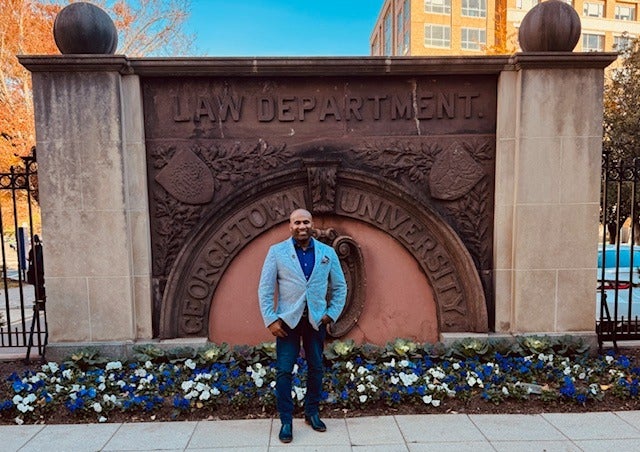
Kittrell Decator on the Georgetown University Law Center campus
In 2016, after being incarcerated for nearly 22 years, Kittrell found himself in a federal facility, clinging to the fading hope of ever seeing his family and friends again. The days were long, heavy, and often unforgiving. Yet every day, he made his way to the prison law library — a small sanctuary where he poured over law books, determined to understand the system that had swallowed him. He studied not just for himself, but for the men around him whose stories had been ignored, whose futures seemed just as uncertain as his own.
Appeal after appeal, the possibility of returning home slipped further from reach. Still, he kept reading, kept fighting, kept believing that somewhere in those pages was a path back to the life he’d been forced to leave behind.
It was during that time Decator learned about The Holloway Project.
Founded by John Gleeson, Debevoise & Plimpton LLP litigation partner and former federal court judge, the project advocates on behalf of incarcerated individuals against unjust, mandatory stacked prison sentences. Many of the clients are first-time offenders who are men of color, which as research proves, is the demographic that is disproportionately impacted by the legal system. Since its founding, The Holloway Project has helped reduce more than 1,100 years of prison sentences for 34 incarcerated individuals in total.
Decator seized the opportunity to write to the organization, hoping they might take on his case. As a first‑time offender facing more than 52 years in federal prison, Decator knew this could be his only chance to be heard.
Nearly two years after writing to District Court Judge Gleeson, Decator received unexpected news from his new lawyer at the Holloway Project: his case was officially under consideration. Then, in 2018, completely out of the blue, he was called to his case manager’s office. On the other end of the phone was someone he had never heard of before — a staff attorney named Marissa Taney.
She introduced herself and explained why she was reaching out, but amid all the details, one sentence rose above everything else: “We would like to represent you — and for free.”
For Decator, the idea of having a prestigious law firm step in pro bono felt almost unreal — like a moment he had never dared to believe would come.
A Moment That Changed Everything
A couple years later, Decator encountered another moment that felt just as unreal — one he once believed might never arrive.
On April 7, 2020, Decator heard footsteps coming down the tier and did not think much of it. He kept reading his book, following the same quiet routine each day. When his cell door opened, he had no idea his life was about to change. Standing there was the unit secretary, who told him he had been granted immediate release.
After being behind bars for 25 years, nine months and 30 days, Decator was about to walk out of prison within hours.
For a moment, he could not move. Shock washed over him, followed by a rush of emotion built up over more than two decades. He and his cellmate embraced, shedding quiet tears as they tried to contain their joy.
Because the prison was under partial lockdown due to COVID-19 protocols, most people were confined to their cells. Decator didn’t want to cause a scene or have people shouting for him to come to their doors. He wanted to hold this moment close — to honor it, and to honor the people who had helped him survive the ordeal.
So he walked slowly to the few cells of those he considered true friends, calling them quietly to the lockdown door and sharing the news that would change his life forever.
Through the Second Chance Act and compassionate release laws, the firm helped Decator secure his freedom.
Making an Impact at Georgetown
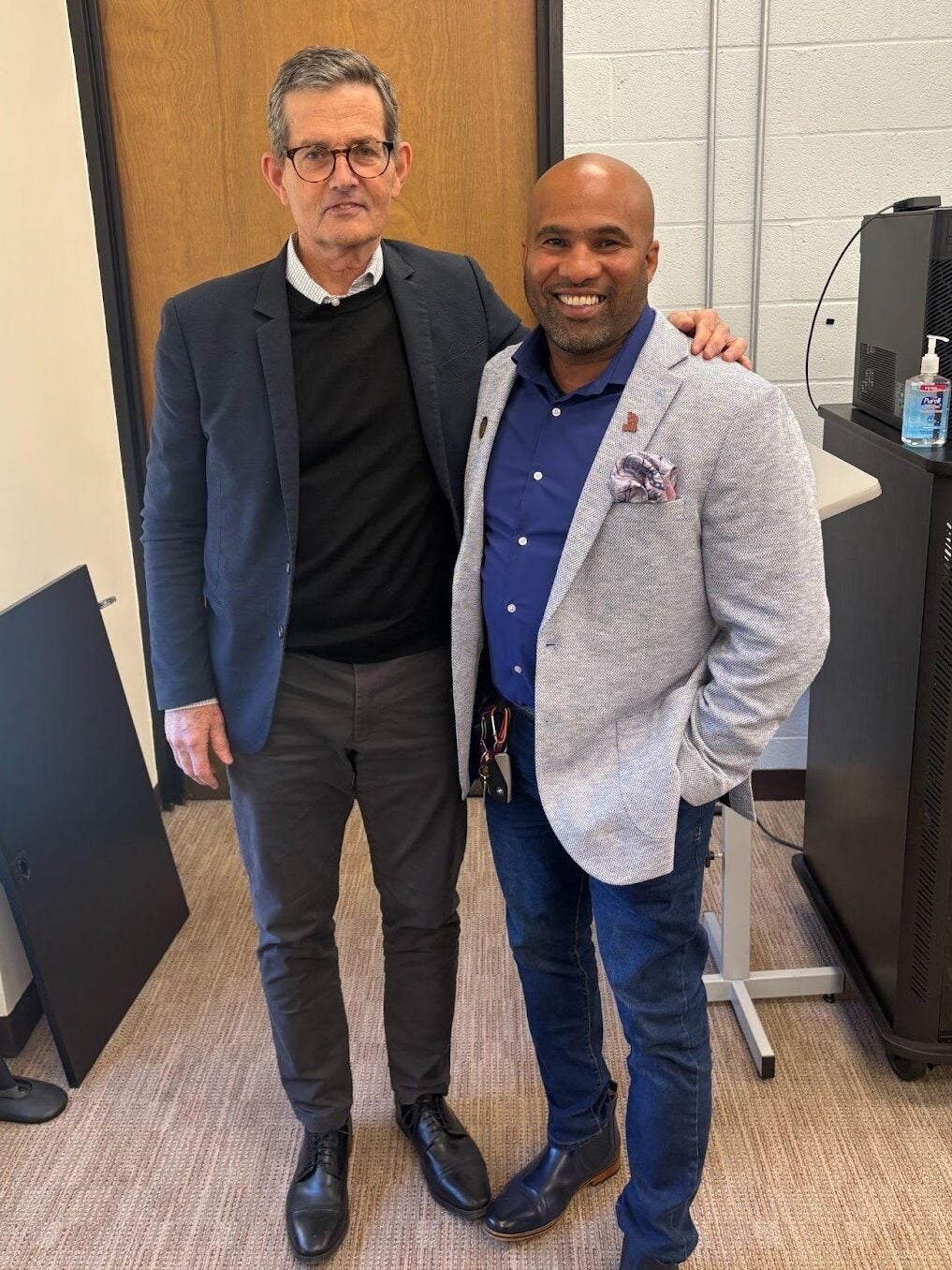
Kittrell Decator and John Gleeson pause for a photo after their discussion at an event hosted by the Georgetown Criminal Law Association and the American Criminal Law Review.
Since being home, Decator doesn’t take for granted the hard work of The Holloway Project team who worked tirelessly on his case. “Since my release, I have lived a purposeful life every day since I’ve been out,” says Decator.
And on November 6, in the hallways of Georgetown Law, Decator finally met, in person, the individual who was instrumental in him gaining his freedom: John Gleeson. They had chatted numerous times before, via phone and Zoom, but never met in person.
This encounter was one filled with tears and a sense of gratitude.
Decator and Gleeson later spoke with Georgetown Law students about their shared story. First, they spoke at an event hosted by Georgetown Criminal Law Association and American Criminal Law Review. Followed by another classroom discussion with first-year law students.
“I am a subject matter expert on the carceral system,” said Decator, underscoring the strength and authority that comes from firsthand experience. “That experience fuels my work and my purpose.”
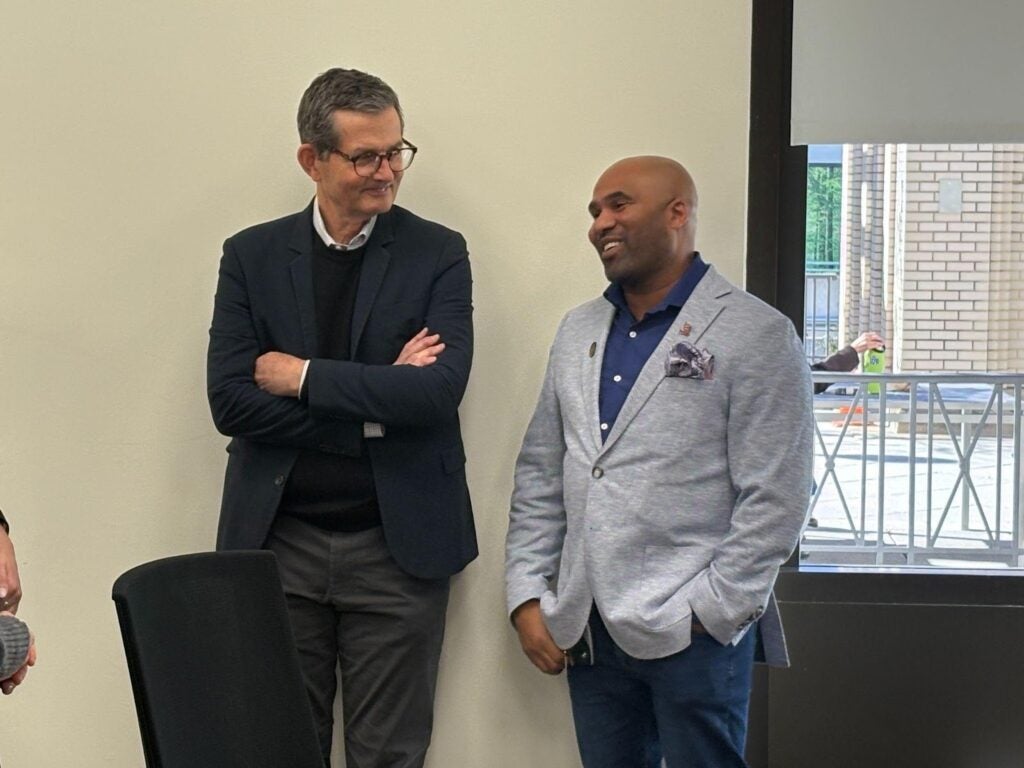
Kittrell Decator and John Gleeson chat after a discussion with Georgetown Law students.
Georgetown Law students were inspired by Decator and Gleeson’s story, and eager to learn more about how to get involved at PJI and The Holloway Project. That enthusiasm reflects the same commitment to justice and education that now guides Decator’s work at PJI.
In his current role at PJI, Decator supports the Prison Scholars Program at the DC Jail. His hard work and dedication to helping incarcerated students is already evident.