How London Teeter Turned Her Own Experience Into Advocacy
Attentive in the classroom, eager to learn and help her classmates, and an active participant in discussions, one would never imagine the many obstacles London Teeter overcame just to be a student.

London Teeter at the end-of-semester celebration for the Prison Scholars Program.
Teeter joined the Prison Scholars Program in fall 2024, after learning about it through a friend and current participant in the program. After completing a rigorous application and interview process, Teeter was accepted into the program and began her educational journey as a Georgetown student. She recalls her first interactions with Valerie Coats, Program Manager of the Prison Scholars Program. “Val conducted my interview [for the program],” said Teeter.
“On the first day of classes, I walked through the door of the education department and was greeted by Val, who called me by name. After only meeting once before, I was shocked that she not only remembered me, but my name as well.”
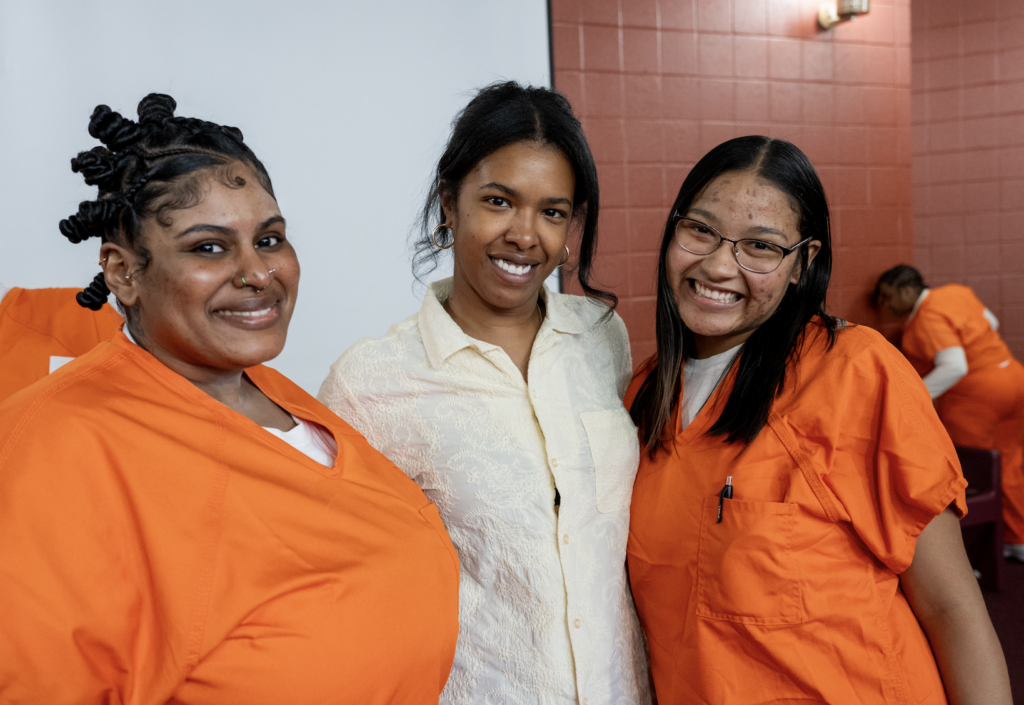
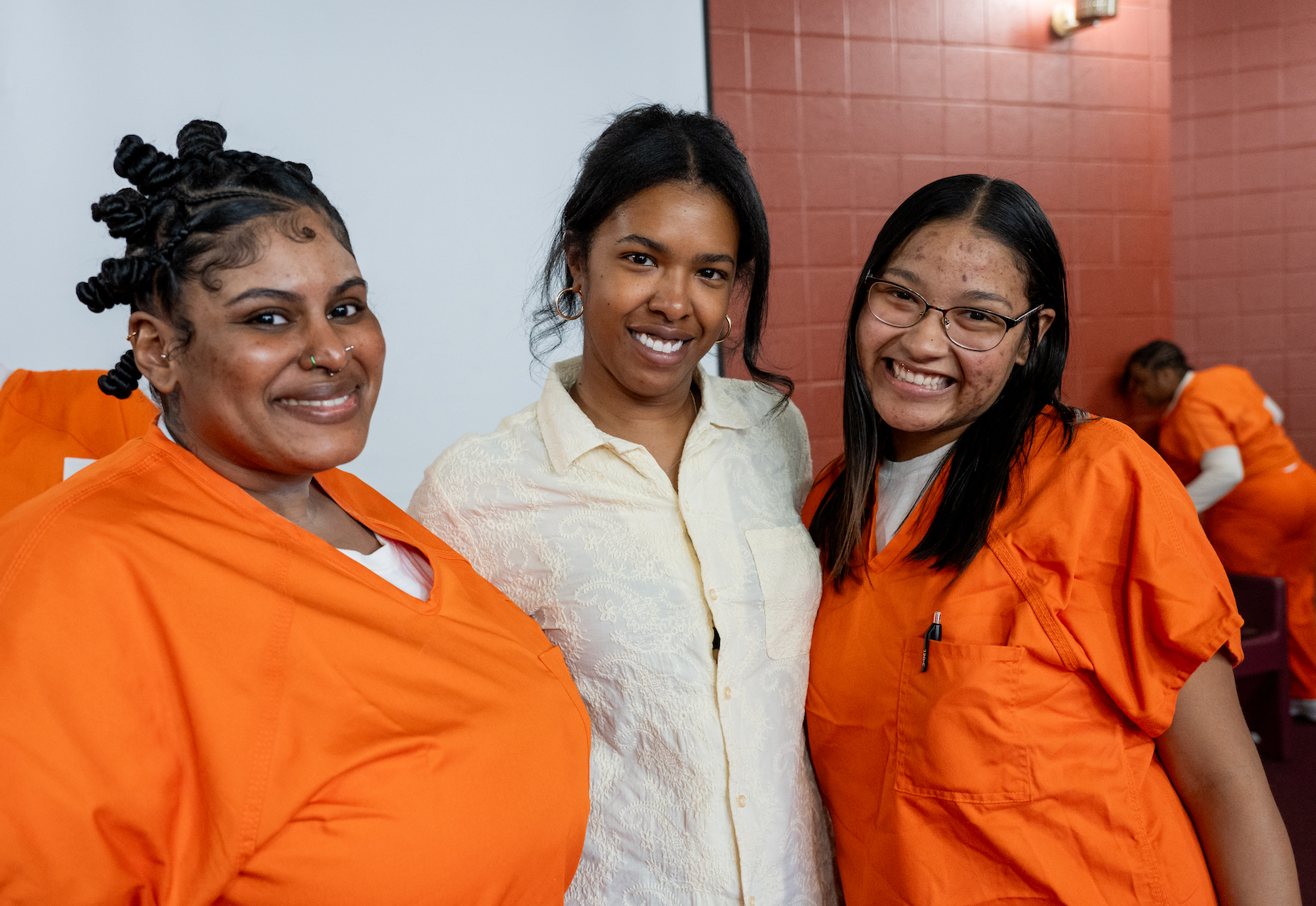
London Teeter (far right) pictured alongside Prison Scholars Program Manager Valerie Coats (middle) and a program classmate (left)
It was from that moment that Teeter knew she had made the right decision — this next chapter was one that was going to be a positive step toward furthering her education in a community that valued and cared about her as a person. Incarcerated in her early 20s, with no prior record, Teeter had never envisioned that the early stages of her pregnancy would be behind bars. Throughout her pregnancy, she found herself navigating a convoluted legal system that struggles to meet the most basic needs of expecting mothers.
Her experience was so challenging that she became instrumental in advocating for the Safe and Supported Pregnancy and Delivery Amendment Act of 2024. The act requires the D.C. Department of Corrections (DOC) to provide comprehensive, no-cost pregnancy and postpartum healthcare, counseling, services, and supplies to individuals in custody. It also ensures that any incarcerated person who may be pregnant can designate a support person for labor, delivery, C-section, or termination and requires the DOC to approve or deny the request within five days, provide written denials, and allow an alternate support person if needed. Although Teeter didn’t have access to many of the resources now required under the act, her willingness to speak up helped make sure future pregnant individuals will. Her experience pushed her to advocate for change, and that same determination now guides her as she moves forward.
Teeter’s source of inspiration comes from wanting better for her daughter. She hopes to one day be an educator, a dream she’s held since childhood. Many Georgetown professors she encounters, including PJI’s Director and Founder Marc Howard, serve as shining examples of how she hopes to lead a class. “All of the professors in the program are amazing,” Teeter said with excitement. “They care about our success and are always there to help us expand our knowledge.”
Teeter continues to set the standard for what it means to be a student in the program. Her tenacity and eagerness to further her education underscore the importance of educational programs in carceral spaces. Programs such as the Prison Scholars Program provide incarcerated individuals with meaningful opportunities for growth. Teeter credits the program for providing humanity, education, and compassion for students. “There is no other program like this one,” says Teeter.
This article is featured in the 2025 Prisons and Justice Initiative Annual Report. Read the full report here.
- Tagged
- Prison Scholars