How Education Helped Amy Cashman Build a New Future
When Amy Cashman looks back on the path that brought her to where she is today, she sees a series of opportunities that came together through some of the toughest moments of her life.
While incarcerated, Cashman had already decided she wanted to change her life. She had tried to figure out how to make that change on her own, but she did not know what the next step would look like. Then she was introduced to programs that gave her a different way forward, including the Georgetown University Prisons and Justice Initiative’s (PJI) Prison Scholars Program at D.C. Jail.
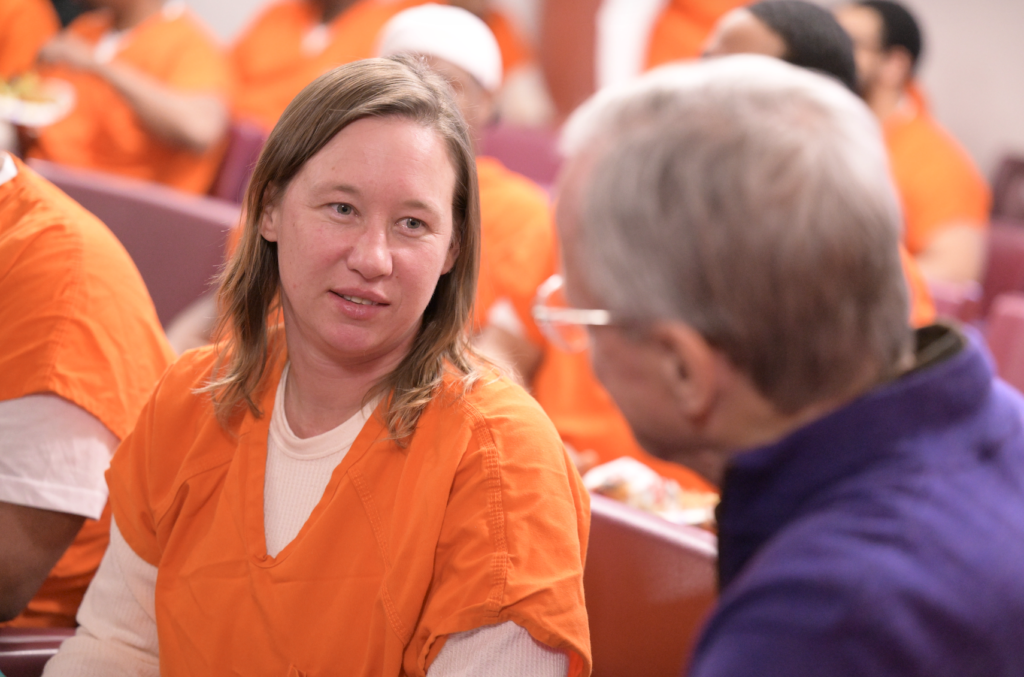
Amy Cashman speaks with a faculty member from the Prison Scholars Program.
“I had no way to change my life back then,” Cashman said. “I had tried everything I could think of. When PJI became an option, it was incredibly satisfying and gave me a real path forward.”
A Path Forward
Cashman took a semester of Georgetown courses while she was incarcerated. The experience introduced her to new ideas and gave her a chance to think about what her life could look like beyond jail.
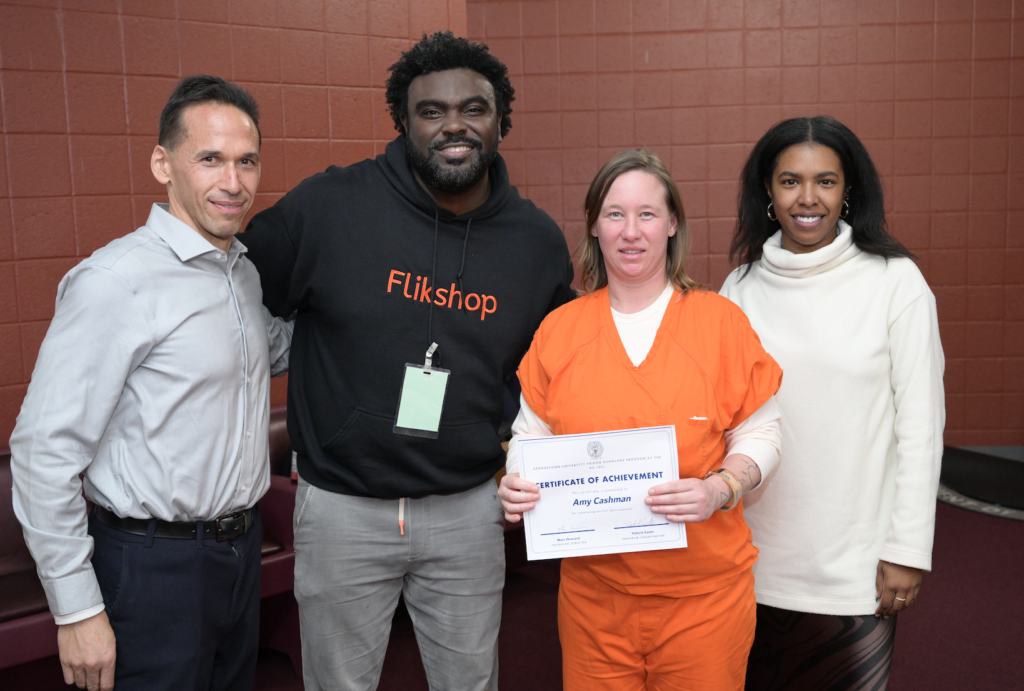
Amy Cashman receives her certificate of completion during a Prison Scholars Program celebration.
For Cashman, that semester marked the beginning of a longer journey. She credits the education she received while incarcerated, followed by PJI’s reentry support when she returned home, with giving her a lifeline that carried her forward.
Cashman first learned about the MORCA-Georgetown Paralegal Program while she was still incarcerated and knew right away that she wanted to apply.
When Cashman returned home, the timing coincided with the program’s application deadline, allowing her to apply and transition directly into the program. “It felt ‘meant to be,’ whatever that means to you,” Cashman said.
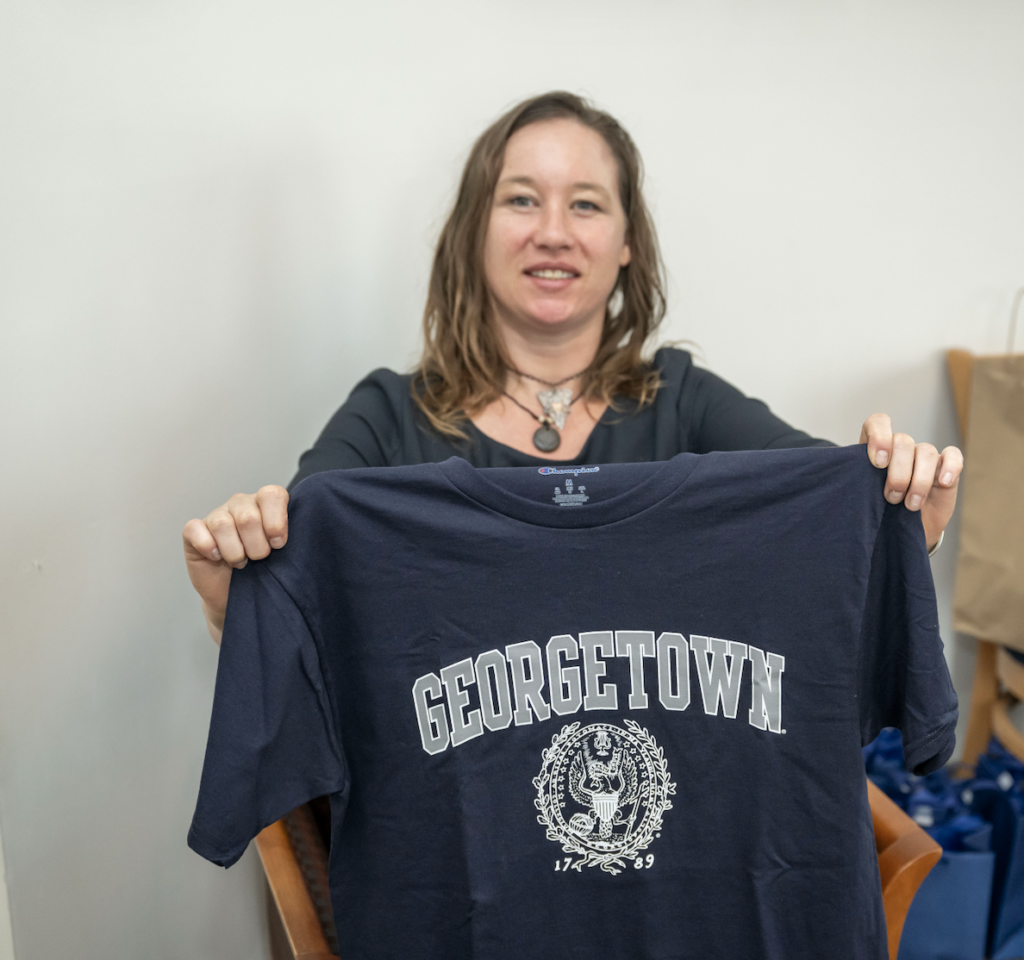
Amy Cashman proudly holds up a Georgetown T-shirt at graduation.
Finding a Different Way to Live
The programs Cashman entered after incarceration gave her structure as she adjusted to life outside of jail. They also became part of her recovery. Today, maintaining her sobriety is one of the accomplishments she is most proud of.
“The MORCA-Georgetown Paralegal Program and PJI community more broadly didn’t just give me classes; they allowed me to stay clean and gave me a different way to live,” Cashman said. Her growth has continued since graduating from the paralegal program. She has become more comfortable talking about her history and the role educational programs played in her life.
At one point, Cashman had to decide whether to include her history with the programs in a professional application. She chose to include it.
For her, that decision reflected how she now sees this part of her life. Her connection to the programs is something she is proud of, not something she feels she needs to hide.
A Different PJI Story
Cashman knows that many people first think of PJI because of its work with people who have been wrongfully convicted. That work matters to her, but it is not her story.
She was not an exoneree. She became involved with PJI because she was looking for a way to change her life while navigating the criminal legal system. Cashman has come to use the term “criminal legal system” rather than “criminal justice system,” a distinction she says reflects her experience and the experiences of people in her community.
For her, the question was not about innocence or guilt. She was dealing with a system that left her with few opportunities to change the direction of her life. “I was lacking new ideas and thoughts until these opportunities came into my life,” Cashman said. “Given this opportunity, I took it — and look at me now.”
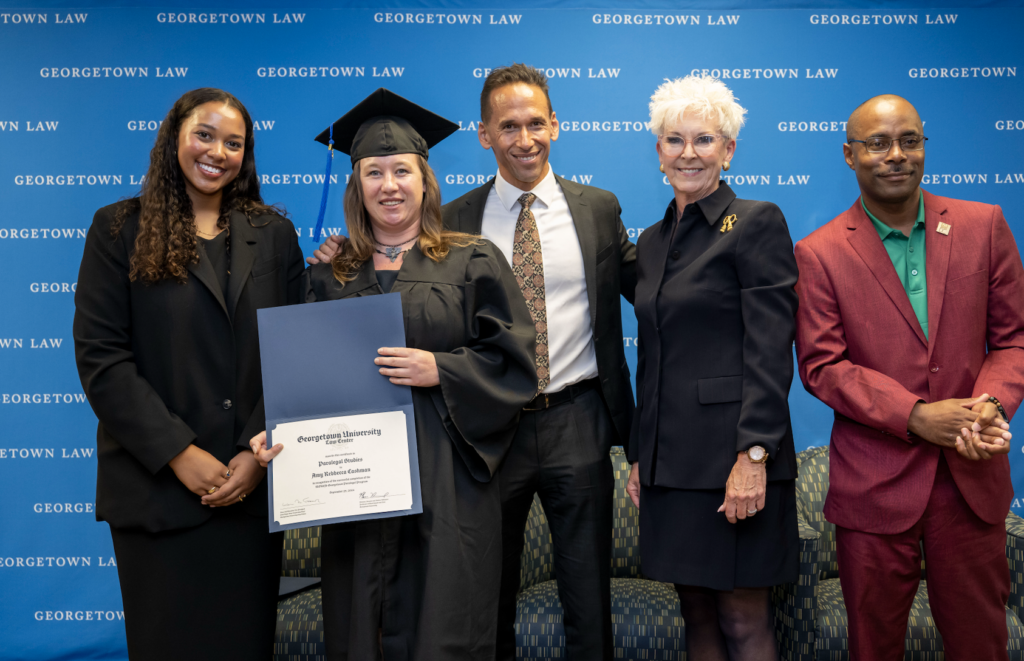
Amy Cashman poses with program staff, faculty and government partners after receiving her Paralegal Studies certificate.
Paying It Forward
Cashman now works with an organization that supports people returning home from prison and jail. She has also started helping others find the same educational opportunities that helped her.
She has helped several people apply to the MORCA-Georgetown Paralegal Program. Two of the people she assisted were accepted. One graduated from the program and found a job upon graduation. Another recently reached out to thank Cashman for encouraging him not to give up.
For Cashman, those experiences have brought her story full circle. She remembers what it was like to be looking for a way forward and not know where to find it. Now, she can help someone else take that first step.