Making an Exoneree Welcomes Ninth Cohort at Georgetown
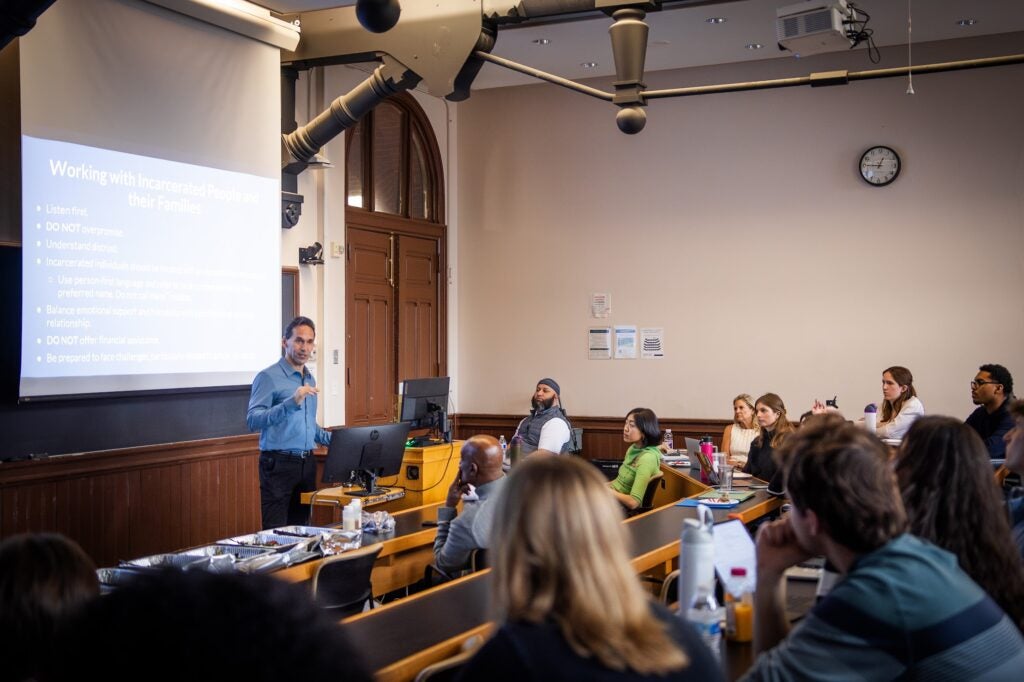
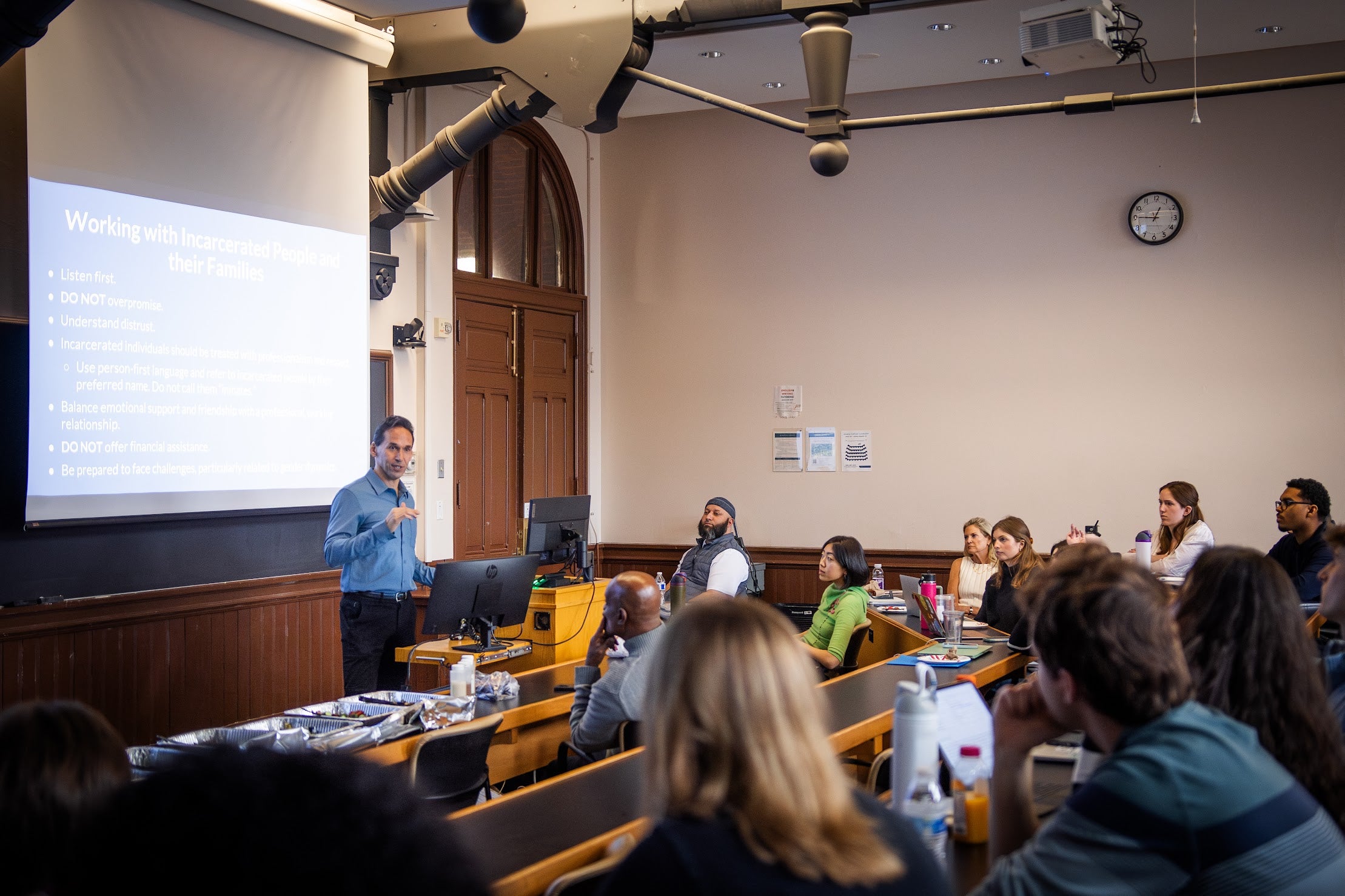
Marc Howard, co-founder of Making an Exoneree and founding director of the Prisons and Justice Initiative, addresses the new cohort.
This January, Making an Exoneree (MAE) welcomed 15 students to its ninth cohort at Georgetown University. Over the course of the semester, undergraduate students have been working together in teams of three to reinvestigate a total of five cases of wrongful conviction and produce a documentary on each. Law students in a companion practicum at Georgetown Law Center, co-taught by Marty Tankleff and Joy Evans, assist each team.
Since its founding in 2018 by Marc Howard and Marty Tankleff, students from the Making an Exoneree course have contributed to the release of 13 wrongfully convicted individuals, including, most recently, John Kinsel in September 2025. The MAE program has expanded to four different universities outside of Georgetown: Princeton University, New York University, University of California at Santa Cruz, and, most recently, Rice University.
Marc Howard, co-founder of Making an Exoneree and founding director of the Prisons and Justice Initiative, said he hopes the program’s expansion will help more individuals and families obtain justice.
“It’s exciting to see students from five great universities across the country dive head first into a common class experience that Marty and I initially launched as an experiment in 2018,” said Howard. “The program’s success at Georgetown, and now at four other universities, has allowed us to continue to expand the number of students who can join the fight to correct injustice, the number of wrongfully convicted people we can support, and hopefully the number of exonerations and prison releases we can help create.”
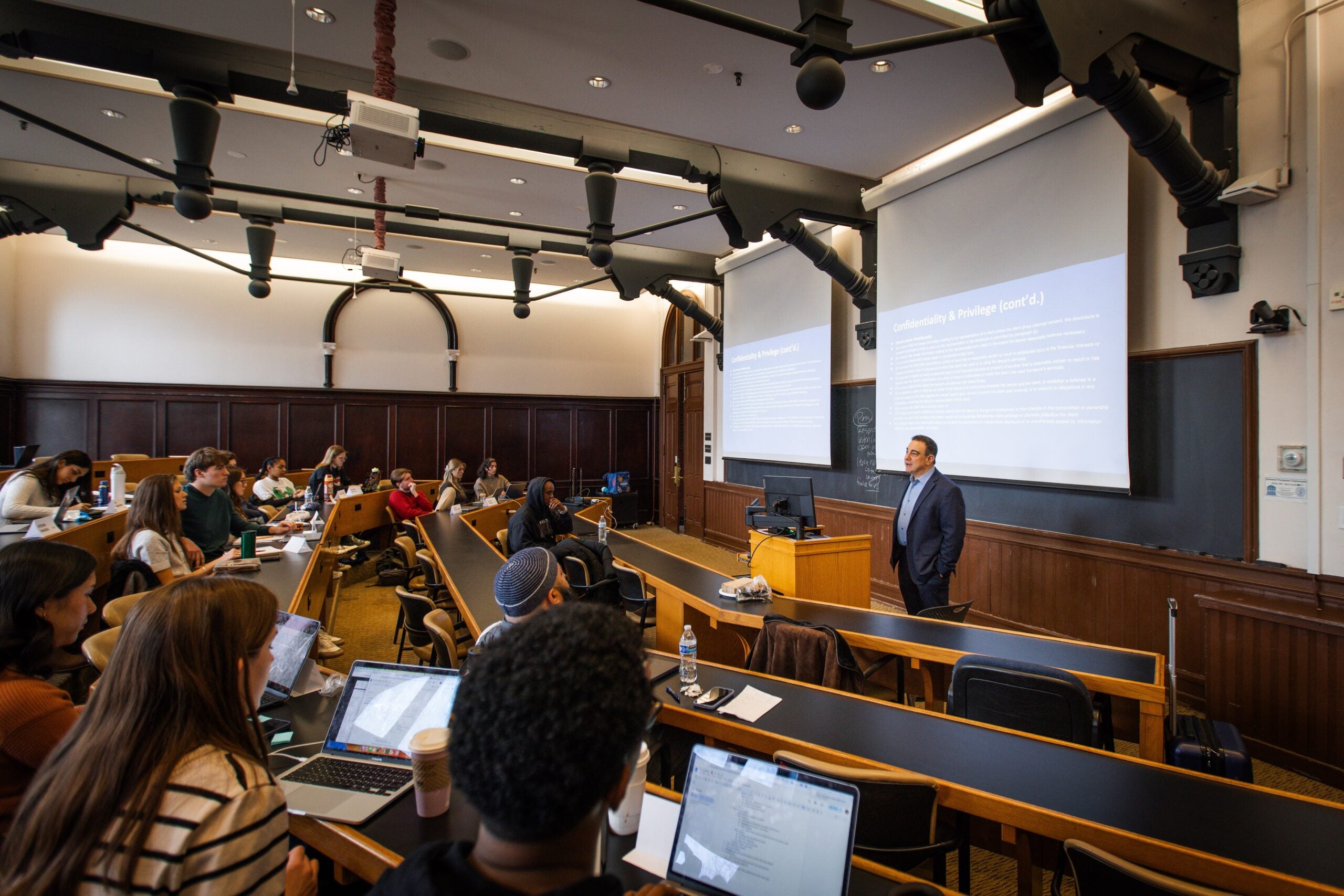
Marty Tankleff, co-founder of Making an Exoneree and Peter P. Mullen distinguished visiting professor at Georgetown University, lectures students on approaching their cases.
Ava Kawamura, the Robert Katzmann Fellow and teaching assistant for the course and herself a former MAE student, said she is honored to have the privilege of contributing to Georgetown’s program through multiple roles.
“Each perspective has given me the invaluable opportunity to lead and support real investigative efforts and advocate for tangible reform,” said Kawamura. “MAE truly has the most unique structure of any course I’ve encountered — it’s completely student-driven and student-led, and is just as much an experiential class as it is an educational one.”
This year’s cases touch on a variety of issues within the criminal legal system, including faulty witness testimony, ineffective assistance of counsel, alternate suspects and confessions by others, and instances of police and prosecutorial misconduct. In addition to visiting their program participants in prison, each team meets with a variety of legal professionals, crime experts, and witnesses to learn more about their case.
Emilia Cipriano, program manager for Making an Exoneree, said she has drawn on her own experience as a past MAE student to help shape this year’s curriculum.
“Having once been in their shoes and now working behind the scenes, I’m constantly looking for ways to refine the program for everyone involved,” Cipriano said. “This year, this includes bringing in practical guest speakers, strengthening support, and creating space for collaboration and investigation.”
Lucy Shreves and her teammates are reinvestigating the case of Stacey (Sabur) Tyler, a man who has been incarcerated on North Carolina’s death row since 1993. She explains that the initial reinvestigation process has already revealed injustices in her team’s case.
“We have met with experts who have given us their perspective on the case, who have argued that the original scientific evidence, which was never presented at trial, supports our participant’s innocence,” said Shreves. “We are hoping that as we uncover more about the injustices, we will be able to create a meaningful documentary that fully encapsulates how our participant was failed by the state from his upbringing to his incarceration.”
Kawamura said Making an Exoneree provides students a unique opportunity to directly impact the lives of incarcerated individuals.
“It places so much trust in the undergraduate teams to make a real difference in someone’s life, and to tackle systemic issues with our country’s criminal justice system, one case at a time.”
Written by Julia Butler
- Tagged
- Making an Exoneree